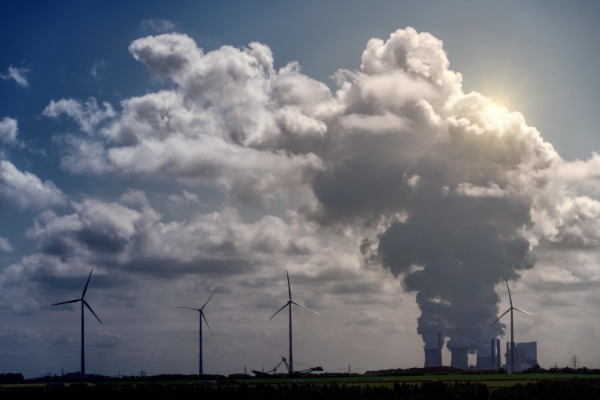
The world is changing — and businesses must evolve too. Decarbonisation, the process of reducing greenhouse gas emissions that contribute to global warming, has become an undeniable priority.
This is not just good for the environment — it is crucial for businesses to remain resilient and competitive. Today, customers, investors and policymakers alike expect companies to operate more cleanly and responsibly.
Why Decarbonisation Can No Longer Wait
To decarbonise means to reduce carbon emissions (such as CO₂ and other greenhouse gases) throughout supply chains, with the aim of building a lower-impact economy — ideally achieving net-zero emissions by mid-century.
This topic became even more urgent in 2024, when the world recorded its hottest year on record: global temperatures were around 1.6 °C above the pre-industrial average, surpassing the 1.5 °C limit set in the Paris Agreement.
As a result, extreme events such as droughts, floods and wildfires have become more frequent, causing damage to people and businesses alike.
Since 2000, climate-related disasters have already caused over US$3.6 trillion in losses, according to the World Economic Forum. Furthermore, businesses now face direct risks such as physical damage, and indirect ones like new carbon taxes.
Governments and markets are responding to this crisis with stronger measures and more ambitious targets. At COP28 in Dubai in 2023, 118 countries pledged to triple renewable energy generation and double energy efficiency by 2030.
At the same time, about 50 of the world’s largest oil companies — responsible for around 40% of global production — promised to reach net-zero operational emissions by 2050, virtually eliminate methane leaks and end routine gas flaring by 2030.
In Brazil, the government revised its climate commitment (NDC) in 2024 and now aims to cut greenhouse gas emissions by 59% by 2035 compared to 2005 levels — potentially reaching 67% with international support.
These targets make it clear: the energy transition and decarbonisation are no longer just good practices — they are explicit demands from governments, investors and consumers.
How Climate Change Impacts Business
Climate change is creating real risks for businesses. Disasters such as floods, droughts and fires disrupt supply chains, damage facilities and reduce production.
According to the World Economic Forum, if nothing is done, extreme events and new regulations could shrink global GDP by up to 22% by 2100.
Beyond risks, new costs are emerging through carbon policies — environmental taxes, stricter production requirements and carbon market rules.
Yet, there are major opportunities too. The same report shows that the green economy already represents around US$14 trillion globally. More sustainable solutions can generate new business models and increase efficiency within companies.
Today, companies across energy, industry, transport and other sectors already face pressure from investors and consumers to set clear pollution-reduction targets.
International regulators are demanding greater transparency, requiring firms to disclose their emissions clearly and follow environmental responsibility standards such as ESG criteria. Discussions are also underway to phase out new projects linked to polluting fuels.
Companies that stick to business as usual risk losing value — and damaging their reputations. In contrast, those taking action now can access green financing, reduce future energy costs and stand out as future-ready leaders.
Brazil as a Leader in the Clean Energy Transition
Brazil has one of the world’s cleanest energy mixes. According to the International Energy Agency, among major economies, Brazil uses the least amount of polluting fuels.
In 2022, around 89% of Brazil’s electricity came from renewable sources — hydro, wind and solar — far above the G20 average.
Brazil holds a unique position: abundant clean energy and a strong commitment to innovation.
A Bloomberg study estimates that around US$6 trillion in investment will be needed by 2050 for Brazil to get close to net-zero emissions.
Most of this must go towards transforming transport and industry. Although it sounds like a large sum, it represents just 8% more than what would already be invested in a ‘business as usual’ scenario — in other words, Brazil already invests heavily in energy and now needs to redirect these funds smartly.
Currently, more than half of energy sector emissions in Brazil come from transport, 25% from industry, 11% from power generation and 6% from buildings.
Switching from polluting fuels to clean energy will therefore be vital to cutting emissions — potentially accounting for 55% of total reductions by 2050.
Beyond vehicles and modern grids, other solutions are advancing rapidly too. Solar and wind power are expanding fast.
Estimates suggest that Brazil could reach 200 gigawatts of solar capacity by 2050, even without significant policy shifts.
Green hydrogen is also gaining traction, supported by businesses and governments alike. Demand for this hydrogen — used in refineries, fertilisers and aviation — could quadruple by 2050, reaching around 8.3 million tonnes.
Traditional sectors like steel, cement and chemicals are exploring new ways to lower emissions, using technologies like advanced biofuels, hydrogen networks and carbon capture.
All this highlights Brazil’s natural advantages — abundant water and sunshine — and an increasing commitment from businesses and government alike.
Brazil is centrally positioned in this transformation, with huge opportunities in solar, wind, storage, hydrogen and evolving environmental standards.
Key Technologies and Strategies for Decarbonisation
For companies and countries to meet their carbon reduction targets, various technologies and strategies are already available. Here are some of the main ones:
Green hydrogen:
A fuel produced from water using clean energy, with vast potential for use in industry and heavy transport such as shipping and aviation.
It is expected that by 2030, green hydrogen will be cheaper than polluting fuels in many countries.
Between 2023 and 2024, numerous global companies signed deals to expand production, targeting 11 million tonnes annually by 2030. Brazil holds an advantage here, thanks to its abundant renewable energy resources.
Solar and wind power:
These are the primary sources of clean electricity generation — and costs continue to fall.
According to the International Energy Agency and BloombergNEF, they are now the cheapest way to produce electricity in much of the world.
Brazil’s plentiful sun and wind make it ideally placed to grow further in this sector, even without extra government incentives.
By 2050, Brazil could exceed 200 gigawatts of installed solar capacity, along with significant growth in onshore and offshore wind. This will boost clean energy supply and reduce reliance on volatile fossil fuel markets.
Energy storage (batteries):
Because solar and wind depend on weather conditions, batteries are vital to store excess energy for use when needed.
Large-scale batteries — and using electric vehicle batteries to feed power back to the grid — help balance supply and demand.
Battery costs are decreasing while production is ramping up. Businesses are already installing batteries at plants and industrial sites to ensure energy stability.
Smart grids and digitalisation:
With many decentralised energy sources (like household solar panels) and variable use (like EVs and smart appliances), grids must become more modern and ‘smart’.
Sensors, artificial intelligence and data analytics help distribute power more efficiently and reduce losses.
The sector’s three key shifts go hand-in-hand: lower emissions, more local generation and more advanced technology. Digital tools for grids and energy management are an essential part of this shift.
Electromobility:
Switching petrol or diesel vehicles for hybrid or fully electric models is one of the simplest and most effective ways to cut transport emissions.
With government incentives, cleaner vehicle targets and falling battery costs, demand for electric vehicles is rising worldwide.
In Brazil, automakers like BYD are investing in electric buses and encouraging hybrid car use. A robust charging network is vital to support this shift. By transitioning fleets to electric models, companies reduce emissions and signal they are future-ready.
Energy efficiency:
Optimising energy use in factories, buildings and cities is a straightforward way to reduce emissions. This includes using more efficient motors, better insulation, and optimising air conditioning and heating.
Well-established technologies — such as energy-efficient lighting, smart cooling systems and urban planning — deliver significant benefits at relatively low cost.
That’s why many firms start with efficiency programmes, including energy audits and adopting standards like ISO 50001, which help to organise and reduce energy use in a structured way.
How to Start Your Decarbonisation Journey
The move towards cleaner energy brings both risks and opportunities for businesses.
Risks include higher costs for polluting fuels, new environmental taxes and the risk of losing value in outdated assets that no longer fit the new reality — such as coal plants or diesel fleets.
On the other hand, the opportunities are vast: access to sustainability-linked finance, lower long-term energy costs (as clean energy is often cheaper) and stronger market and public reputation.
According to the World Economic Forum, half of the emission reductions needed could be achieved today using existing, proven technologies.
The challenge is scaling these solutions and securing resources to implement them.
To stay ahead, companies must embed decarbonisation in their long-term plans. This means rethinking business models (offering lower-impact products and services), choosing partners with sustainable targets and fostering in-house innovation.
Companies that act now demonstrate leadership and turn risks into advantages.
Experts recommend some practical steps:
- Measure current emissions (to know where to start)
- Improve energy efficiency
- Partner with startups that develop clean solutions
- Engage customers, regulators and investors in a clear change plan
In short: decarbonisation is no longer just an environmental issue — it is a business strategy.
Many companies — from tech to heavy industry — are already reaping the benefits of operating more cleanly and efficiently. In Brazil, this shift is even more relevant as the country already boasts one of the cleanest energy mixes in the world and significant room for growth.
The Bakery can help your company move forward with practical innovation solutions for energy and climate.
How we support organisations on this journey:
- We map energy sector trends and identify real business opportunities.
- We help create and test new models for clean energy and decarbonisation.
- We build strategies for companies looking to grow or enter the renewable energy sector.
- We solve challenges by connecting companies with innovative startups — including those focused on climate solutions and emissions reduction.
Let’s accelerate your transition to a more sustainable future. Get in touch with The Bakery.